Indonesia, country view
Investment guide

Property investment in Indonesia

Indonesia, and Bali above all, offers some of the highest advertised rental yields in the region.

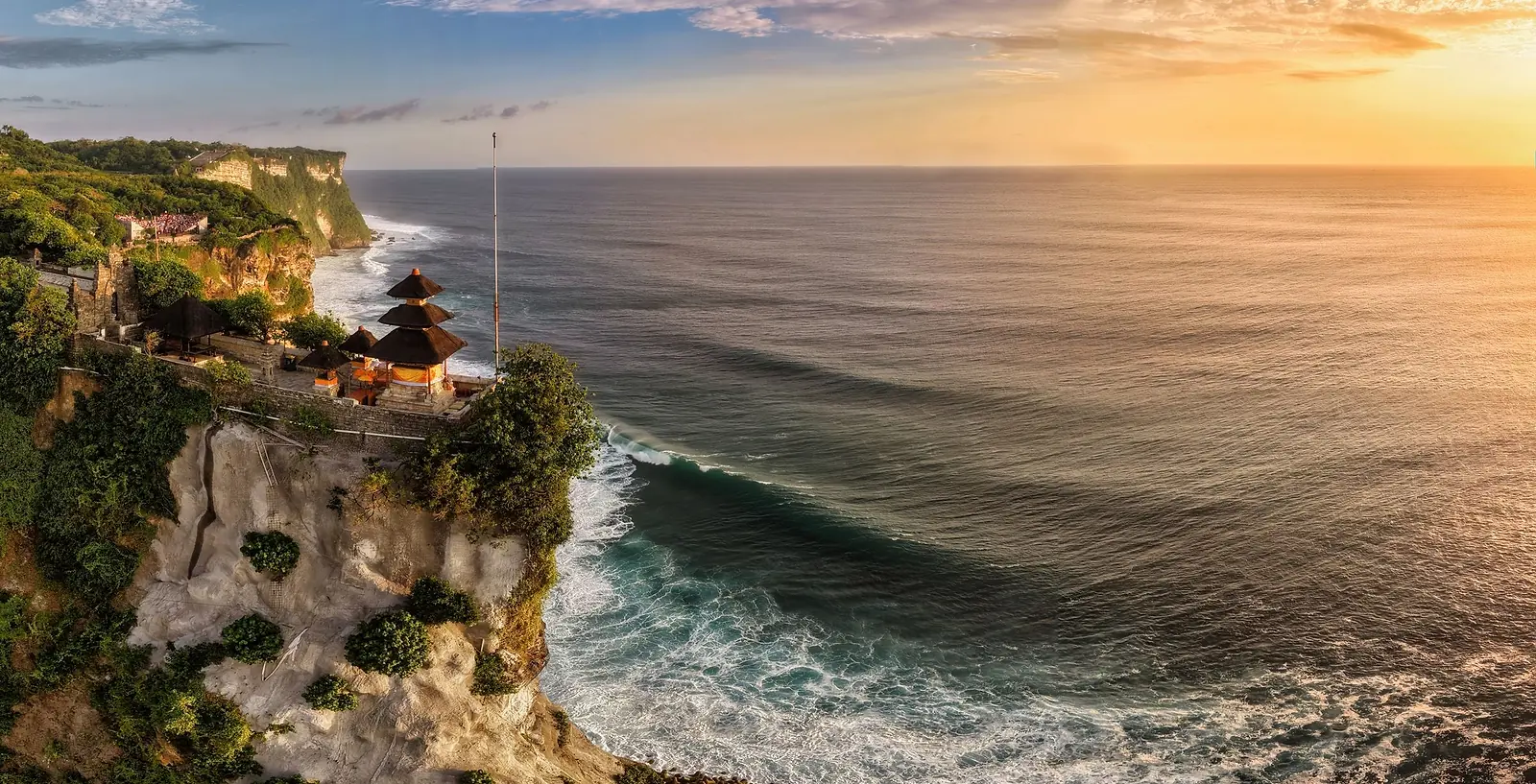
Photo: Tom Fisk, Pexels

$2,663/m²

Market median per sqm

The primary market of managed residences in Bali is the segment closest to our catalogue. No reading of this quality exists for Indonesia as a whole.

$52,650

Entry from

150

Projects in the catalogue

This is a market for an investor who knowingly accepts a contractual form of ownership and currency risk in exchange for a potentially high yield, not a classic freehold market for conservative capital.

Strengths

  • The Second Home Visa lowers the entry bar through a deposit from 126,000 dollars or a property from 1 million dollars and grants a 5 or 10 year visa
  • The economy still grows at 4.7 to 5.1 percent a year, and tourism has passed its pre-pandemic record by 12 percent

What to keep in mind

  • But without classic foreign ownership: the law reserves full Hak Milik title for citizens
  • While a foreigner can hold Hak Pakai use rights for up to 80 years, a Hak Sewa lease for 25 to 30 years, or a PT PMA company structure with capital from 150,000 dollars that holds an HGB right
  • It is a visa, not a path to owning land
2 more
  • The rupiah traded near historic lows against the dollar through 2026, a mainstream mortgage for a non-resident is practically nonexistent
  • On off-plan the certificates and permits are verified before any payment

The property market in Indonesia right now

$2,663/m²

Market median per sqm

The primary market of managed residences in Bali is the segment closest to our catalogue. No reading of this quality exists for Indonesia as a whole.

150

Projects in the catalogue

Units on sale: 394

2026-08-30

Exchange rate as of

openexchangerates.org, cross-checked

Spread of price per sqm in the catalogue

$2,014/m²$2,466/m²$3,115/m²

based on 150 of 150 projects

A price trend chart will appear once enough observations accumulate: daily snapshots of the catalogue aggregates have been collecting since August 2026, and we will not draw a line through a single point.

Buying rules in Indonesia

What a foreign buyer actually owns

Can a foreigner own property here?

full title is reserved for Indonesian citizens alone under Article 21 of the Basic Agrarian Law

Source: Nusantara DFDL, Lawzana, обзор регулирования PP 28/2025
More detail

Indonesian law leaves no path to full land title for a foreigner: Article 21 of the Basic Agrarian Law reserves Hak Milik for the country citizens. The available forms depend on residency status or a corporate structure, and the choice decides both the holding term and what happens to the asset on resale.

Hak Milik is closed to a foreigner
full title is reserved for Indonesian citizens alone under Article 21 of the Basic Agrarian LawThis is a constitutional restriction, not a regional practice: it applies the same way on Bali and on Java.Source: Nusantara DFDL, Lawzana, обзор регулирования PP 28/2025
Hak Pakai for visa holders
a use right of up to 80 years (30+20+30), available to KITAS or KITAP holdersHak Sewa (leasehold) is usually written for 25 to 30 years and does not require a local residence permit, but it also does not carry the same level of legal protection.Source: Nusantara DFDL, Lawzana, обзор регулирования PP 28/2025
PT PMA structure
minimum registered capital of 2.5 billion rupiah (about 150,000 dollars after the October 2025 reform), holds an HGB rightA PT PMA is an Indonesian legal entity with foreign participation, not personal ownership: the asset belongs to the company, not directly to the individual.Source: Nusantara DFDL, Lawzana, обзор регулирования PP 28/2025
Taxes and fees

What taxes apply on purchase?

5%

Purchase tax (BPHTB)

5 percent of the property value, minus the NPOPTKP tax-free threshold

Source: ownpropertyabroad.com, Eastern Edge
More detail

The one-off transaction taxes in Indonesia are meaningful and fall on both sides of the deal: the buyer budgets BPHTB before signing the deed, the seller pays a final sale tax, and the annual ownership tax is computed off a value that runs below market, not off market itself.

Purchase tax (BPHTB)
5 percent of the property value, minus the NPOPTKP tax-free thresholdThe nationwide minimum threshold is 80 million rupiah, rising to 300 million in some regions and for inheritance; the buyer pays before the deed is signed.Source: ownpropertyabroad.com, Eastern Edge
Sale tax
a final income tax, PPh Final, of 2.5 percent of the deal value, paid by the sellerThe notary-PPAT cannot certify the sale deed (AJB) without proof this tax has been paid.Source: ilaglobalconsulting.com, esalesinternational.com
Annual ownership tax (PBB)
0.1 to 0.5 percent of the NJOP assessed valueNJOP usually runs below the market price, and the taxable base NJKP is typically 40 percent of NJOP, so the effective rate against market value ends up well below the headline figure.Source: Expat Focus, ilaglobalconsulting.com
Rental tax for a non-resident
final tax PPh 4(2): 20 percent of gross income for a non-resident, 10 percent for an Indonesian tax residentThe tax is withheld from gross income with no expense deductions, which changes the net yield math compared with jurisdictions that tax net profit.Source: investinasia.id, xpnd.co.id
Residency through a purchase

Does a purchase grant residency?

a deposit from 2 billion rupiah (about 126,000 dollars) in a state bank, or a property from 1 million dollars held under Hak Pakai

Source: Immigrant Invest, Kinnara Asia
More detail

The Second Home Visa grants a long-term right to stay in the country, not land ownership: the deposit and the property route are two different paths to the same status, and both are measured by registered value, not by a private agreement.

Entry threshold
a deposit from 2 billion rupiah (about 126,000 dollars) in a state bank, or a property from 1 million dollars held under Hak PakaiThe deposit route is cheaper and does not require buying a unit; the property must be held specifically under Hak Pakai, not any other right.Source: Immigrant Invest, Kinnara Asia
Visa term
5 or 10 years, depending on the threshold chosenAfter 3 years of continuous residence the holder can move to ITAP, the equivalent of permanent residency.Source: Immigrant Invest, Kinnara Asia
How the deal runs

How does the deal run?

7steps in the deal

the AJB deed is prepared and certified by a notary-PPAT

Source: villabalisale.com, Kingswood Bali
More detail

The deal is built around the AJB deed prepared by a notary-PPAT, but the notary signature does not replace an independent check: the land certificate needs to be verified directly with the land agency, not from a copy handed over by the seller or the agent.

Deal documentation
the AJB deed is prepared and certified by a notary-PPATBefore signing, an independent check of the certificate directly with BPN and a zoning check against RTRW/ITR maps are mandatory; a copy from the seller does not count as verification.Source: villabalisale.com, Kingswood Bali
Off-plan protection
escrow or staged payments tied to construction milestonesPhantom projects are common, where deposits are collected for units that exist only as renders; a developer can run out of capital and delay handover.Source: paradysehomes.com, Seven Stones Real Estate
  1. Step 1. Verify the land certificate (sertifikat) directly with the National Land Agency (BPN), not from a copy provided by the seller.
  2. Step 2. Check the plot zoning against the RTRW/ITR maps: land in a green zone (Zona Hijau) cannot legally carry a commercial villa.
  3. Step 3. On a completed unit verify the PBG building permit and the SLF certificate of worthiness for use, without them the unit is not legal to rent out or resell.
  4. Step 4. On off-plan insist on escrow or on payments tied to confirmed construction milestones, not to the calendar.
  5. Step 5. Agree and sign the sale deed (Akta Jual Beli, AJB) with the notary-PPAT.
  6. Step 6. Pay the BPHTB tax before the deed is signed, the notary will not certify the deed without proof of payment.
  7. Step 7. Register the right (Hak Pakai, Hak Sewa, or the PT PMA structure) in the register after signing.

Cost of money and of holding

A mainstream mortgage for a foreigner in Indonesia is practically unavailable, and the rupiah traded near historic lows in 2026, together the two factors mean most deals close in cash rather than with leverage.

Mortgage for KITAS/KITAP holders
the first dedicated Permata Bank programme since June 2025, LTV up to 60 percent, rate roughly 8 to 10 percent a year

The minimum property value is 2 billion rupiah, the minimum borrower income is 25 million rupiah a month (about 1,560 dollars), the down payment is 30 to 40 percent, and the programme runs on Islamic financing principles.

Source: Tranio, Rumavi, обзоры рынка 2026
Rupiah rate
the USD/IDR pair hit a historic high of 18,247 in June 2026 and has held in a range of 18,100 to 18,200

Since April 2026 buying more than 50,000 dollars of currency per person a month requires supporting documents, a Bank Indonesia measure against speculation.

Source: tradingeconomics.com, FXStreet, Bank Indonesia

Rental yield: what a source confirms

Below are published yield ranges with publisher and year. This is a market benchmark, not a computation for a specific unit: the platform has no rental model of its own for Indonesia, so none of these numbers is fed into a calculator.

Short-term rental
gross yield of 10 to 18 percent a year, up to 12 to 18 percent in Canggu and Berawa

After the management company fee (15 to 25 percent), maintenance and taxes, net yield settles around 8 to 12 percent.

Source: Paradyse Homes, Investland Bali, обзоры рынка 2026
Long-term rental
gross yield of 5 to 9 percent at 85 to 90 percent occupancy

Operating costs of 20 to 30 percent of income give a net yield comparable to short-term rental, 7 to 11 percent.

Source: Paradyse Homes, обзоры рынка

What can go wrong

The risks of the Indonesian market sit not in taxes but in paperwork: invalid certificates and permits show up more often than on mature markets, so they are verified before the deposit, not after.

What gets checked on off-plan: a developer can run out of capital, push the handover date, or build a unit below the specifications advertised.

More detail

There are also projects that exist only as renders, where the deposit goes straight to a developer account with no security behind it. The practical takeaway: insist on escrow or on payments tied to confirmed construction milestones, and never prepay for a unit without an independent progress check.

The second check is about permits, not money: the mandatory PBG building permit (which replaced the earlier IMB in 2021) can turn out invalid or simply missing, as can the SLF certificate of worthiness for use, so both are verified in the registry.

More detail

Without them a unit cannot legally be rented out or resold, and land in a green zone (Zona Hijau) or on protected farmland cannot legally carry a commercial villa no matter what the seller promised.

Risk 1Off-plan riskproject non-completion, delayed handover, specifications below what was advertised

Escrow or staged payments tied to construction milestones, not to the calendar, are recommended.

Source: paradysehomes.com, Seven Stones Real Estate
Risk 2Risk of forged permitswithout valid PBG and SLF a unit cannot legally be rented out or resold, authenticity is checked in the registry

Land in a green zone (Zona Hijau) or on protected farmland cannot legally carry a commercial villa.

Source: villabalisale.com, Kingswood Bali

Market direction

This block carries only the external dynamics of the economy, tourism and prices, the price per sqm level on this page is computed on our own sample, and external price benchmarks are deliberately not carried over here, so that two different numbers under one caption do not argue with each other.

GDP growth
the IMF forecasts 5.0 to 5.1 percent for 2026, the World Bank and the OECD forecast 4.7 percent

The three institutions forecasts differ only slightly and all point to steady rather than accelerating growth.

Source: IMF, World Bank, OECD Economic Outlook
Inflation
the OECD forecasts 3.4 percent for 2026

Bank Indonesia holds its inflation target at 2.5 percent with a tolerance band.

Source: OECD Economic Outlook, Bank Indonesia
Tourism
344 trillion rupiah in foreign tourist revenue in 2025, 12 percent above the 2019 record

By WTTC estimate tourism forms about 5.5 percent of the country GDP.

Source: World Travel & Tourism Council, business-indonesia.org
Land on Bali
land prices in the island prime zones rose 15 to 30 percent over two years

The growth is uneven across districts, and the absolute price per sqm level is not given in this profile, on this page it is computed from our own catalogue.

Source: ownpropertyabroad.com, Magnum Estate

We will shortlist projects in Indonesia for your budget and goals

Get a shortlist

Cities of the country

Smart Matching

Properties selected to fit your budget and goals

Get a hand-picked list of investment properties, complete with yield figures, matched to your criteria

Your information stays protected and is never passed to third parties

Members-only catalog

Handpicked Investment Opportunities

A private, hand-selected list of uncommon deals built for serious investors: land, hotels, commercial property, development, co-investment, private lending and more

Takes half a minute. We don't do spam.

  • Rare deals that never hit the open market
  • Real analysis, not another listings feed
  • Straight-line access to deals worth a look
  • One-on-one advisory whenever you need it
  • Certain offers stay off the public catalog entirely
  • Every listing screened by our team first

Frequent questions about Indonesia

Can foreigners actually buy property in Indonesia at all?

No. Article 21 of the Basic Agrarian Law reserves full Hak Milik title for Indonesian citizens alone - a constitutional restriction applying equally on Bali and on Java. A foreigner can access three forms: Hak Pakai, a use right of up to 80 years (in 30+20+30 cycles), available to KITAS or KITAP holders; Hak Sewa, a 25 to 30 year lease that does not require a local residence permit but also carries less legal protection; and a PT PMA structure, an Indonesian entity with minimum capital of 2.5 billion rupiah (about 150,000 dollars after the October 2025 reform), which holds an HGB right, meaning the asset belongs to the company, not directly to the individual.

Is it possible to complete the entire purchase remotely, without visiting in person?

Yes, a special notarial power of attorney (surat kuasa khusus) lets a foreign buyer avoid being physically present in Indonesia: it can be used to sign the AJB deed before a notary-PPAT, take part in the transaction and handle PT PMA paperwork. An absolute power of attorney (surat kuasa mutlak) with unlimited disposal rights over the land is banned under Government Regulation No. 24/1997, since it is treated as an illegal nominee scheme circumventing the foreign ownership ban. According to legal guides from 2025-2026, the power of attorney is drafted before an Indonesian notary, usually with a Bahasa translation and a passport copy attached.

What's the correct way to send money into Indonesia to pay for a purchase?

Funds are transferred through a licensed foreign exchange bank (bank devisa) in Indonesia via SWIFT wire transfer, not cash. Bank Indonesia requires supporting documents (a sale agreement, an invoice) for transfers above a set threshold: it was 100,000 dollars until April 2026, cut to 50,000 dollars a month from 1 April 2026, and further cut to 25,000 dollars from 1 July 2026; cash currency purchases are capped at 10,000 dollars a month per customer. Before wiring funds it is worth checking the current version of Bank Indonesia's rules on the payment date.

What taxes should a buyer and owner expect to pay?

The buyer pays the BPHTB duty before the AJB deed is signed - 5 percent of the property value minus the NPOPTKP tax-free threshold (a nationwide minimum of 80 million rupiah, rising to 300 million in some regions and for inheritance). The seller pays a final income tax, PPh Final, of 2.5 percent of the deal value - the notary-PPAT will not certify the deed without proof it was paid. The annual ownership tax PBB is calculated from the understated NJOP assessed value at 0.1 to 0.5 percent of it. A non-resident's rental income is taxed at 20 percent of gross income, with no expense deductions.

How do the different ownership forms differ from each other?

Full Hak Milik title is reserved for Indonesian citizens under Article 21 of the Basic Agrarian Law, so a foreigner only has access to derivative rights. Hak Pakai is a use right for up to 80 years in 30+20+30 cycles, available to KITAS or KITAP holders. Hak Sewa is a civil-law lease for 25 to 30 years, requiring no local residence permit but offering weaker legal protection. A PT PMA is an Indonesian company with foreign capital from 150,000 dollars that holds an HGB right; in this case the asset belongs to the entity, not directly to the individual.

How risky is it to buy a property that's still under construction?

The off-plan market, on Bali especially, calls for extra caution: phantom projects exist where deposits are collected for units that only exist as renders, and a developer can run out of capital or delay handover. A separate risk concerns permits: without valid PBG and SLF a completed unit cannot be legally rented out or resold, and land in a green zone cannot legally carry a commercial villa. Practical protection is insisting on escrow or on payments tied to confirmed construction milestones rather than a calendar, and verifying the land certificate directly with BPN before paying.

How does the rental and management side typically work?

Short-term rental on Bali advertises a gross yield of 10 to 18 percent, up to 12 to 18 in Canggu and Berawa, but after a management company fee of 15 to 25 percent, maintenance and taxes, net yield settles at 8 to 12 percent. Long-term rental at 85 to 90 percent occupancy gives a gross 5 to 9 percent and a comparable net yield of 7 to 11 percent. A non-resident's income is taxed under the final PPh 4(2) at 20 percent of the gross amount with no expense deduction. The market also features developer-run 'guaranteed yield' schemes; per industry sources as of 2026 these are commercial promises with no government regulation or insurance behind them.

What expenses come up once you actually own the property?

The annual ownership tax (PBB) is formally low, 0.1 to 0.5 percent, but it is calculated not on market price but on the underassessed NJOP value, which lowers the effective rate. Beyond the tax, per industry reviews as of 2026, running a rented 2-3 bedroom villa on Bali typically costs an owner 27,000 to 57,500 dollars a year, covering staff payroll, pool and garden upkeep, utilities, banjar community fees and insurance; a separate reserve of 3 to 5 percent of property value per year for maintenance is also recommended. This is market practice, not a legally fixed rate, and varies heavily with villa size and staffing.

Can the owner live in the property themselves, and on what legal grounds?

The right to live in the property follows from the ownership form chosen, not from a separate permit. Hak Pakai gives a holder of a valid KITAS or KITAP a personal use right over the house for up to 80 years (30+20+30), and this is the route most often used for a personal home. Hak Sewa (leasehold) does not require a residence permit but stays a civil contract, not a registered right in rem. Under a PT PMA structure the asset is held by the company under an HGB right, so the owner's personal residence is legally tied to shareholder status, not a direct individual title.

How do you go about selling the property later?

Selling Hak Pakai is done through a notarial sale and purchase deed (AJB) before a PPAT and registered at the BPN/ATR land office with the certificate, passport and KITAS of the foreign buyer; only a foreigner with a valid residence permit can buy Hak Pakai. The seller pays a final income tax, PPh, of 2.5 percent of the deal value, and the buyer pays BPHTB of 5 percent of the land value. Assigning a Hak Sewa lease is not treated as a land right transfer: it is done through a separate assignment agreement between the parties and the landowner, without registering a title change at BPN.

What documents do you need to gather for the deal?

For Hak Pakai a foreigner needs a valid passport and an Indonesian stay permit, KITAS or KITAP, an application letter requesting the right, a tax number NPWP (usually registered as an individual), land certificates and tax records, proof of the application fee, and, if married to an Indonesian citizen, a copy of the marriage certificate and the spouse's ID. When signing the AJB deed, the notary-PPAT additionally checks the original title documents and the property's tax records. No single official source lists this as one formal checklist, so it is compiled from several legal guides and should be confirmed with a PPAT or the local BPN office.

What risks does currency volatility create in Indonesia?

The USD/IDR pair held near historic lows for the rupiah through 2026, reaching 18,247 in June, so a dollar-denominated yield needs to be recalculated regularly rather than once at purchase. Bank Indonesia has also tightened currency controls at the same time: since April 2026 supporting documents are required for currency purchases above 50,000 dollars per person a month, and since July the threshold was cut to 25,000 dollars, with the cash purchase limit reduced to 10,000 dollars a month. For an investor this means not only exchange rate risk but also growing transparency requirements when moving funds out.

Do you need a lawyer, and what exactly should they check?

Yes. The notary-PPAT certifies the AJB deed but does not run an independent check of the property, that is a separate task for the buyer or a lawyer. What gets checked: the land certificate directly with BPN rather than a copy from the seller, the zoning against RTRW/ITR maps (land in a green zone cannot legally carry a commercial villa), and on a finished unit the valid PBG building permit and SLF fit-for-use certificate. During off-plan construction a lawyer also checks the payment terms, insisting on escrow or on payments tied to construction milestones rather than a calendar.

What kind of rental yield can you realistically expect?

Published gross ranges for Bali run from 5 to 18 percent depending on rental type and district: short-term 10 to 18 percent, long-term 5 to 9 percent. Net yield after management, maintenance and taxes usually settles at 7 to 12 percent. We do not compute a rental model for Indonesia, so we do not preset a default rate.

What do "guaranteed income" programmes actually mean?

This is a developer marketing offer, not a government programme: there is no official regulation or insurance backing such guarantees in Indonesia. Industry reviews show Bali developers advertising gross yields of 5 to 15 percent, sometimes up to 17 percent a year, while independent calculations of net yield after management, booking platform commissions, staff and PT PMA taxes put the real figure around 3 to 4 percent a year. Risks include undisclosed deductions, conditional guarantees with clawback clauses, and no enforceability if the developer defaults, meaning the promised payout carries no legal protection.

Do you need a visa to own property in Indonesia?

A foreigner cannot hold property directly under Hak Pakai without a residence permit, that right is available only to KITAS or KITAP holders. But two other routes do not require local residency: a Hak Sewa lease (usually 25 to 30 years) is arranged through a civil contract with no link to immigration status, and a PT PMA structure holds the HGB right as a company, not as an individual. The Second Home Visa is a separate programme that grants long-term residence, not land ownership: a deposit from 126,000 dollars or a Hak Pakai property from 1 million dollars grants a visa for 5 or 10 years.

Sources (36)

Sources and methodology

Where the data comes from

The market figures are the live Housebook catalogue aggregate for this country plus an external publisher's reading where one has been found and verified. The legal, visa and tax facts come from the country profile: every number names its source.

Methodology

The median and quartiles are computed over active catalogue projects with a known price per square metre. Prices are converted to dollars using a single exchange rate snapshot rather than a mix of dates, so the figures stay comparable.

How often it updates

The catalogue aggregates are recomputed every day. The country profile and the external readings are updated by hand: the date of the last check is shown next to every source in the list below.

External market reading

What is measured
primary market of Bali branded residences: 59 projects, 3,643 units
Publisher's methodology
the source publishes a range of 30-65 million rupiah per sqm; the midpoint is the figure converted to dollars
Period of the data
2025
Original value and rate
48M IDR/m²; 17836 (Bank Indonesia JISDOR, 2026-08-14)
Checked on
2026-08-16

Sources

Entries: 17. Click to expand
  1. 1.Nusantara DFDL, Lawzana, обзор регулирования PP 28/2025. Право собственности иностранцев на недвижимость в Индонезии. 2026, checked 2026-08-15. https://www.nusantaradfdl.com/insights/content-hub/articles/foreign-investment-indonesia-real-estate/
  2. 2.Immigrant Invest, Kinnara Asia. Second Home Visa Индонезии: условия и порог входа. 2026, checked 2026-08-15. https://immigrantinvest.com/indonesia-second-home-visa/
  3. 3.ownpropertyabroad.com, Eastern Edge. Налог на недвижимость для иностранцев в Индонезии, полный гид. 2026, checked 2026-08-15. https://www.easternedge.co/news/indonesia-property-tax-for-foreigners-a-comprehensive-guide
  4. 4.ilaglobalconsulting.com, esalesinternational.com. Налогообложение недвижимости в Индонезии: полный гид. 2026, checked 2026-08-15. https://ilaglobalconsulting.com/navigating-property-taxation-in-indonesia-a-comprehensive-guide/
  5. 5.Expat Focus, ilaglobalconsulting.com. Налоги на недвижимость в Индонезии. 2026, checked 2026-08-15. https://www.expatfocus.com/indonesia/guide/indonesia-property-taxes
  6. 6.investinasia.id, xpnd.co.id. Гид по налогу на аренду недвижимости в Индонезии. 2026, checked 2026-08-15. https://investinasia.id/blog/indonesia-rental-tax-guide/
  7. 7.villabalisale.com, Kingswood Bali. Строительное законодательство Бали 2026: гид по PBG и SLF. 2026, checked 2026-08-15. https://kingswoodbalivillas.com/navigating-balis-2026-construction-laws-a-guide-to-pbg-slf/
  8. 8.paradysehomes.com, Seven Stones Real Estate. Как на самом деле работают мошенничества с недвижимостью на Бали в 2026 году. 2026, checked 2026-08-15. https://www.paradysehomes.com/blog/how-bali-property-scams-actually-work-in-2026-the-mechanics-behind-forged-titles-phantom-listings-and-fake-agents-targeting-foreign-buyers
  9. 9.Tranio, Rumavi, обзоры рынка 2026. Ипотека в Индонезии для экспатов. 2026, checked 2026-08-15. https://nobleasiaid.com/mortgages-in-indonesia-for-expats/
  10. 10.tradingeconomics.com, FXStreet, Bank Indonesia. Прогноз по индонезийской рупии на середину 2026 года. 2026, checked 2026-08-15. https://www.fxstreet.com/news/indonesian-rupiah-mid-year-outlook-why-is-idr-near-historic-lows-despite-bank-indonesias-575-rate-202607310130
  11. 11.Paradyse Homes, Investland Bali, обзоры рынка 2026. Доходность аренды на Бали. 2026, checked 2026-08-15. https://investlandbali.com/bali-rental-yield/
  12. 12.Paradyse Homes, обзоры рынка. Доходность аренды вилл на Бали в 2026 году: что реально, а что миф. 2026, checked 2026-08-15. https://www.paradysehomes.com/blog/bali-villa-rental-yields-in-2026-whats-real-whats-hype-and-what-the-data-actually-shows
  13. 13.villabalisale.com, Kingswood Bali. Риски разрешений на Бали: PBG и SLF. 2026, checked 2026-08-15. https://www.villabalisale.com/blog/bali-permits-pbg-slf-risks
  14. 14.IMF, World Bank, OECD Economic Outlook. Прогноз роста ВВП Индонезии на 2026 год. 2026, checked 2026-08-15. https://business-indonesia.org/news/imf-cuts-global-growth-outlook-to-3-1-indonesia-forecast-at-5-in-2026
  15. 15.OECD Economic Outlook, Bank Indonesia. Экономический прогноз ОЭСР по Индонезии, 2026. 2026, checked 2026-08-15. https://www.oecd.org/en/publications/2026/06/oecd-economic-outlook-volume-2026-issue-1_8be0dba6/full-report/indonesia_12d20c97.html
  16. 16.World Travel & Tourism Council, business-indonesia.org. Экономический прогноз Индонезии на 2026 год: устойчивость и туризм. 2025, checked 2026-08-15. https://business-indonesia.org/news/indonesia-s-economic-outlook-2026-resilient-but-acceleration-elusive
  17. 17.ownpropertyabroad.com, Magnum Estate. Обзор цен на землю на Бали. 2026, checked 2026-08-15. https://ownpropertyabroad.com/indonesia/bali/land-price-overview-bali/

The figures on this page describe the market and the rules as of the date they were checked. This is reference information, not an offer, investment advice or a promise of returns.

Expert Session

A one-on-one session with an investment analyst

We will review your investment profile, work out a strategy, and estimate expected returns, at no cost and with no obligation

Your information stays protected and is never passed to third parties